
GUIDE
Curtains in corner windows
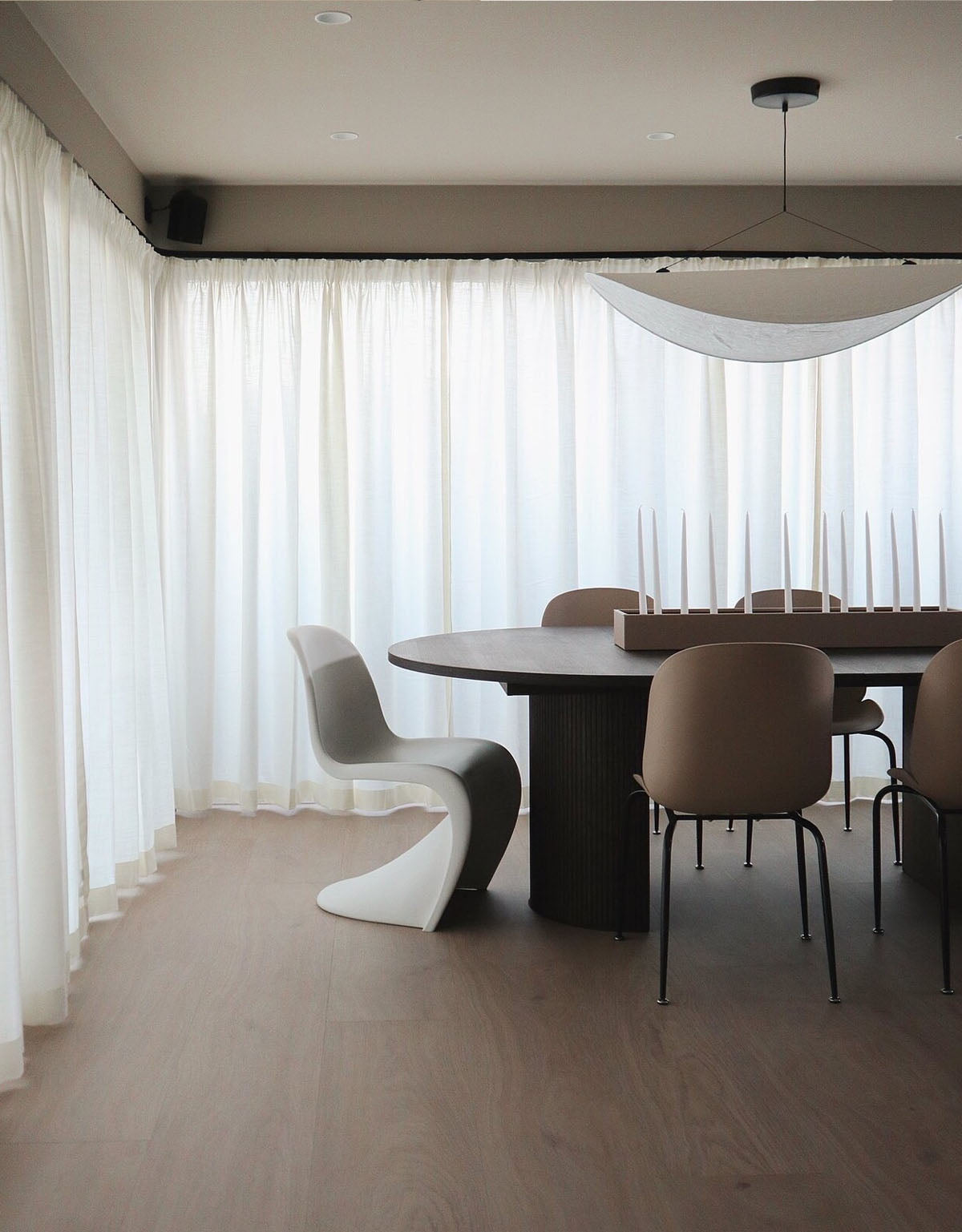
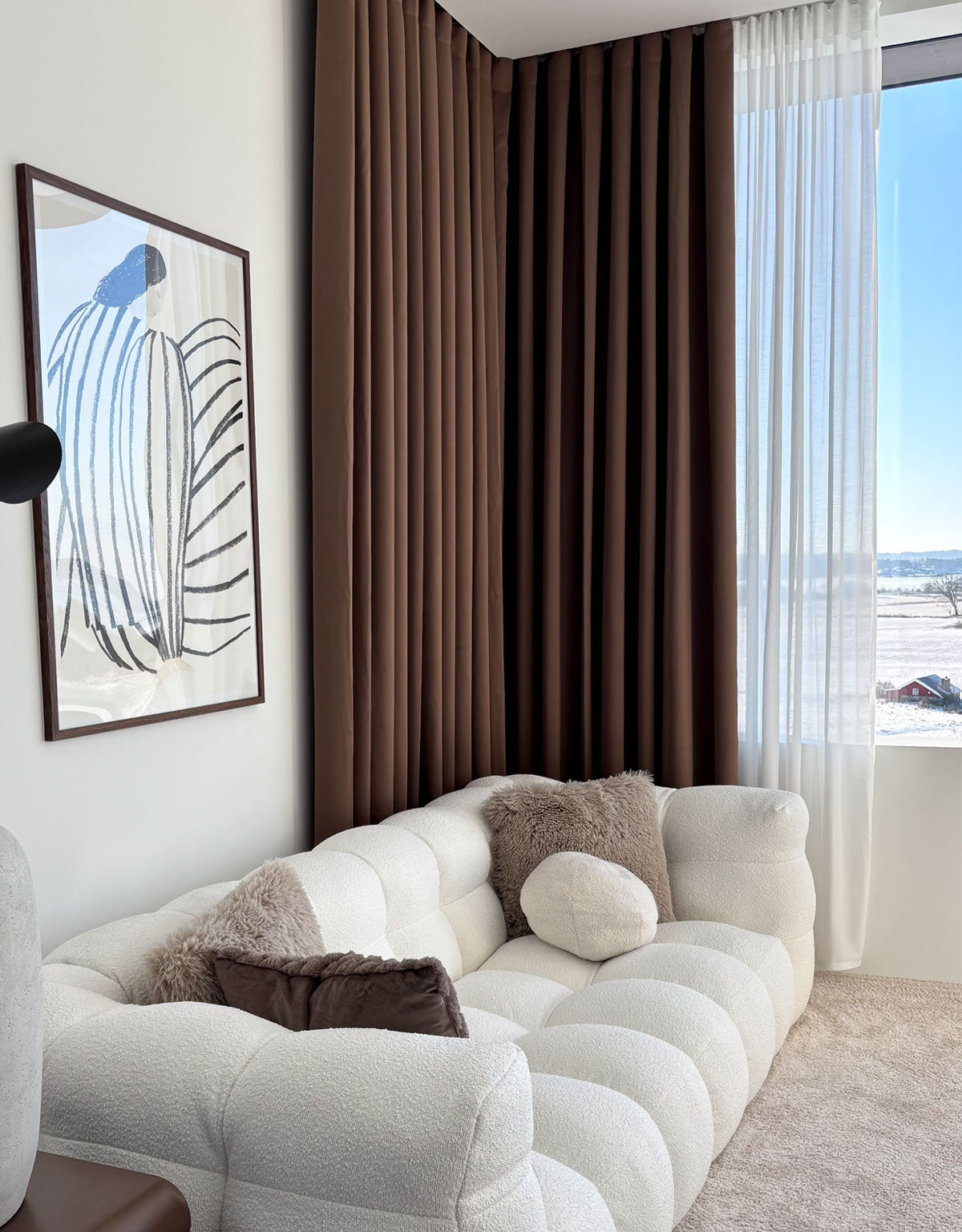
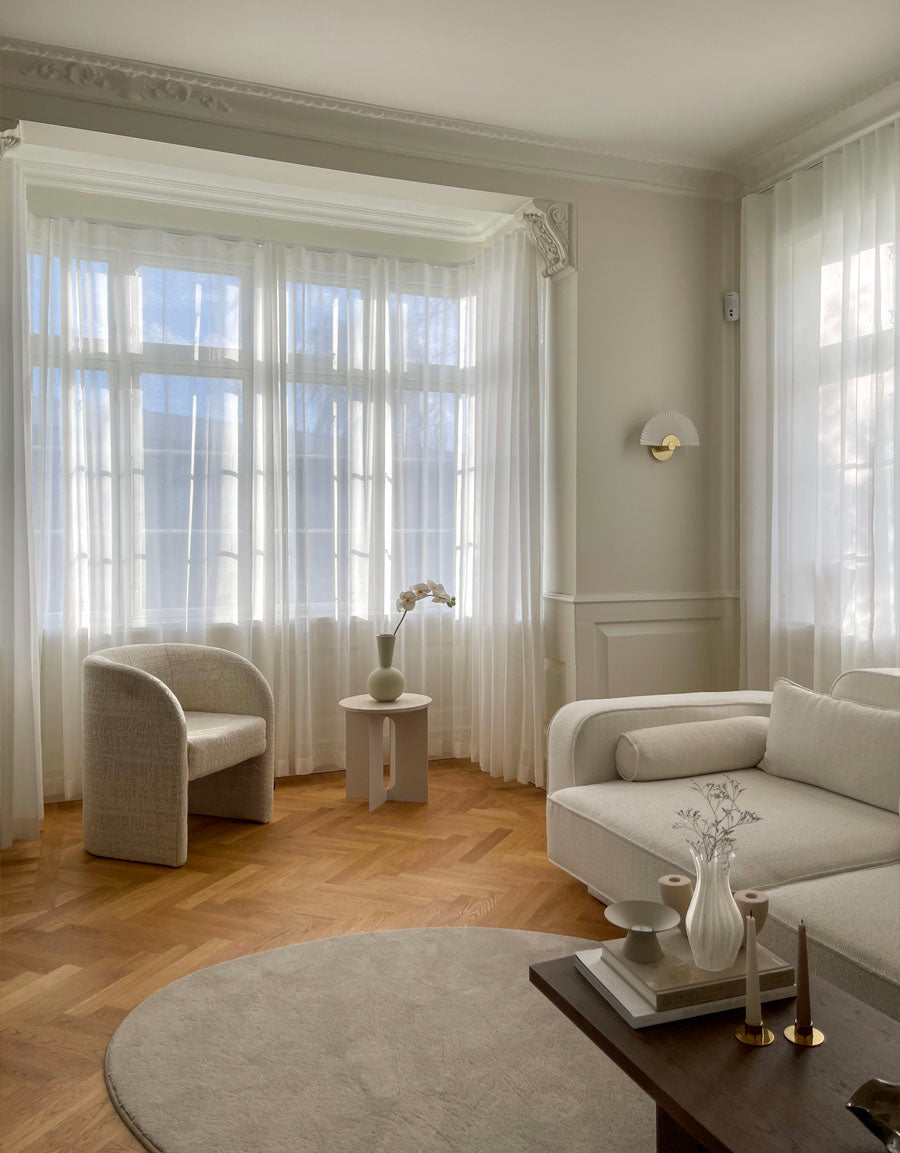
Curtains are often a good choice for corner windows too, where it can be particularly important to be able to screen off, regulate light and protect against prying eyes. Corners can feel a little more complicated to dress with curtains, but you can actually use both curtain tracks and curtain rods – depending on which hanging you prefer. With a connectable solution, you also get a seamless result that is both practical and stylish.
In this guide, we'll go through how to hang curtains in corner windows and provide tips on what's needed to achieve a functional whole and a beautiful end result.
How to choose the right curtain suspension for corner windows
Both curtain rods and certain models of curtain tracks can be joined together in a corner using corner bends. This provides a neat, seamless result in a right-angled corner – and allows the curtain to be drawn through or cover the corner without the arrangement feeling interrupted.
Curtain rods in corner windows are often a good choice when the curtains are primarily decorative and intended to frame the window in an attractive way. Curtain tracks, on the other hand, are particularly suitable when you want a more flexible and functional curtain arrangement in corner windows – for example, for light regulation, privacy, or blackout where the curtains are opened and closed as needed. Many curtain tracks also have more accessories for corners, which makes it possible to adapt the solution to the corner's design and angle.
Curtain track in corner
With a curtain track in a corner window, you can create a really stylish curtain arrangement – especially if you choose the right accessories. A corner bend allows you to join two tracks together so that you can pull the curtain through the corner and achieve a seamless look. If, instead, you want the curtain to enclose an outer corner and pull the curtain over the corner, for example, in a bay window where you want to cover the surrounding walls as well, you can use a return bend. This way, you can adapt the curtain solution even when the room has angles and nooks.
With a ceiling-mounted curtain track, it is easy to adjust the distance to the wall, which can be helpful if you have obstacles such as protruding windowsills, pipes, or radiators. The same types of bends can also be used with wall-mounted solutions, as long as the track and accessories are compatible.
Read more about how to think about measurements and distances in our guide to curtain tracks.
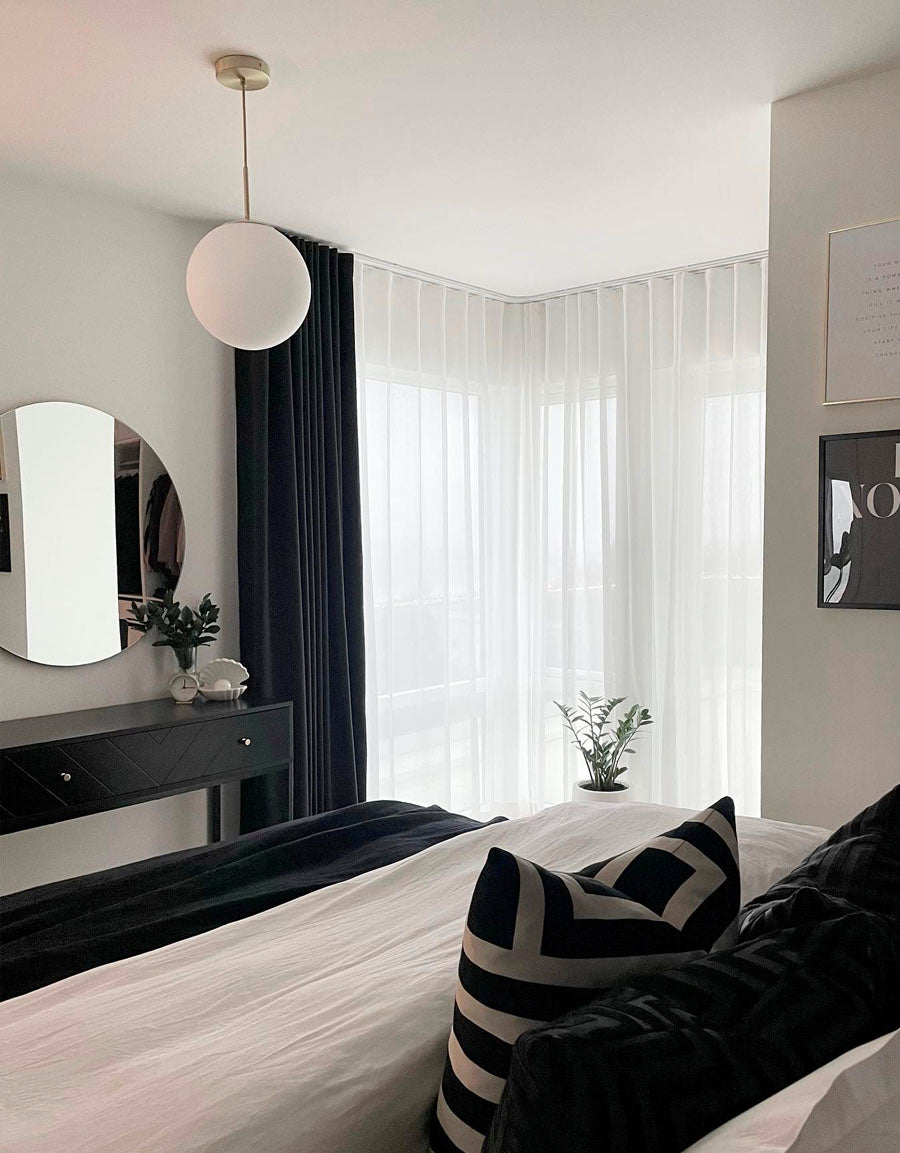
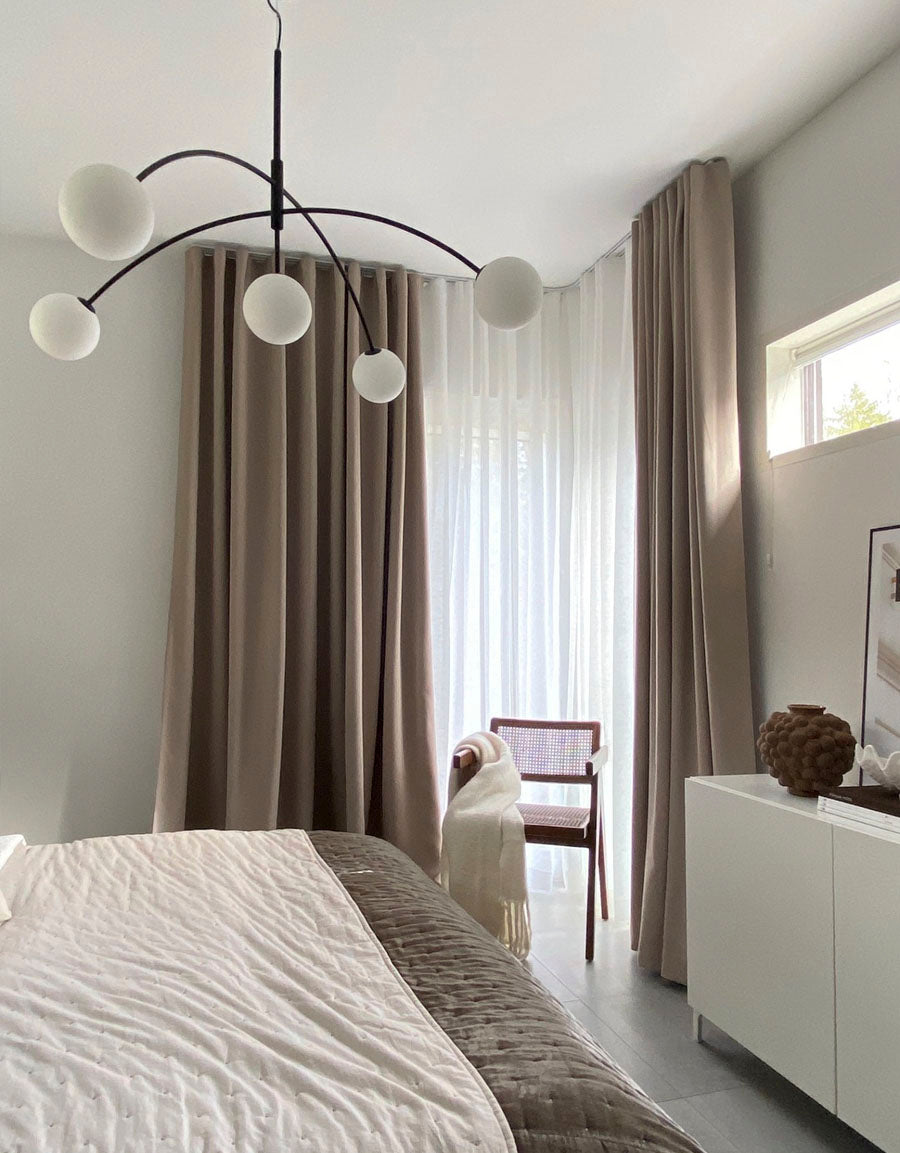
Double curtains in a corner window
The popular curtain arrangement with double curtains in two layers also works well in a corner window. You get a lovely hotel feel when you frame the window on both sides, while also creating a flexible solution that can be adapted to your needs for both privacy and blackout.
To achieve a seamless look in a corner, you need two curtain layers on two separate curtain tracks, where each track is joined at the corner with its own corner bend. If you have a protruding windowsill or other obstacles that cause the outermost track to be far from the wall, a return bend can be a good complement. This allows the curtain to fold towards the wall and cover the space that would otherwise be between the track and the wall – especially valuable when you want to reduce light leakage from the sides for blackout. Read more about how to consider measurements and placement for double layers in our guide on curtain tracks.
Common questions about curtains for corner windows
What is the difference between an elbow, a return bend, and an angle bend?
The difference depends on whether the curtain is to be drawn through or around a corner:
- Corner bend: used to draw the curtain through a corner.
- Return bend: used to draw the curtain around a corner (e.g., at an outer corner/bay window).
- Angle bend: can be used both through and around a corner.
What's the best solution for curtains in a corner window – a track or a curtain rod?
It depends on both style and needs, as both curtain tracks and curtain rods can be joined at a right-angled corner. A curtain rod is suitable if you want a more decorative look and curtains that primarily frame the window. A curtain track in a corner window is often more flexible and can be adapted with various accessories, making it a good choice if you want to be able to adjust the solution according to the corner's design.
How do I measure a corner window for a track/rod?
Start by determining where the track or pole should be positioned in relation to the wall (learn more in our curtain track guide), and then measure the lengths on each wall based on that placement. Curtain poles are often more forgiving as many models are adjustable, whereas a curtain track with corner bends requires more precise measurements and deductions for the bend's dimensions. A tip is to mark out the placement on the ceiling/wall (e.g., with tape) so you can clearly see where the components will end up before measuring. Feel free to contact us if you need help with your solution!
Can I get help choosing the right solution if I send measurements/a picture?
Yes, absolutely – we'd be happy to help you choose the right solution and get the correct measurements. Measuring angles and corners can be a bit tricky, so send us your measurements and preferably a picture, and we'll guide you.
Which curtain track should I choose for my corner window?
Which curtain rail for a corner window is best depends on the look you want and how you want the curtain to hang, but several models can be supplemented with corner bends for a neat corner solution:
- Convex: a stylish rail available in several colours.
- U-rail: a neat and discreet rail – especially suitable for hotel curtains/hotel waves.
- Alex: a versatile rail that works with most types of curtains.
How do I black out my corner window?
For blackout of a corner window, blackout curtains on a curtain track are a good solution. With a corner bend, you can cover the corner itself without a gap where light could otherwise seep in. If you also want to reduce light leakage from the sides, you can add return bends, so that the curtain turns towards the wall and covers the gap between the wall and the curtain.