
GUIDE
Pleated blinds
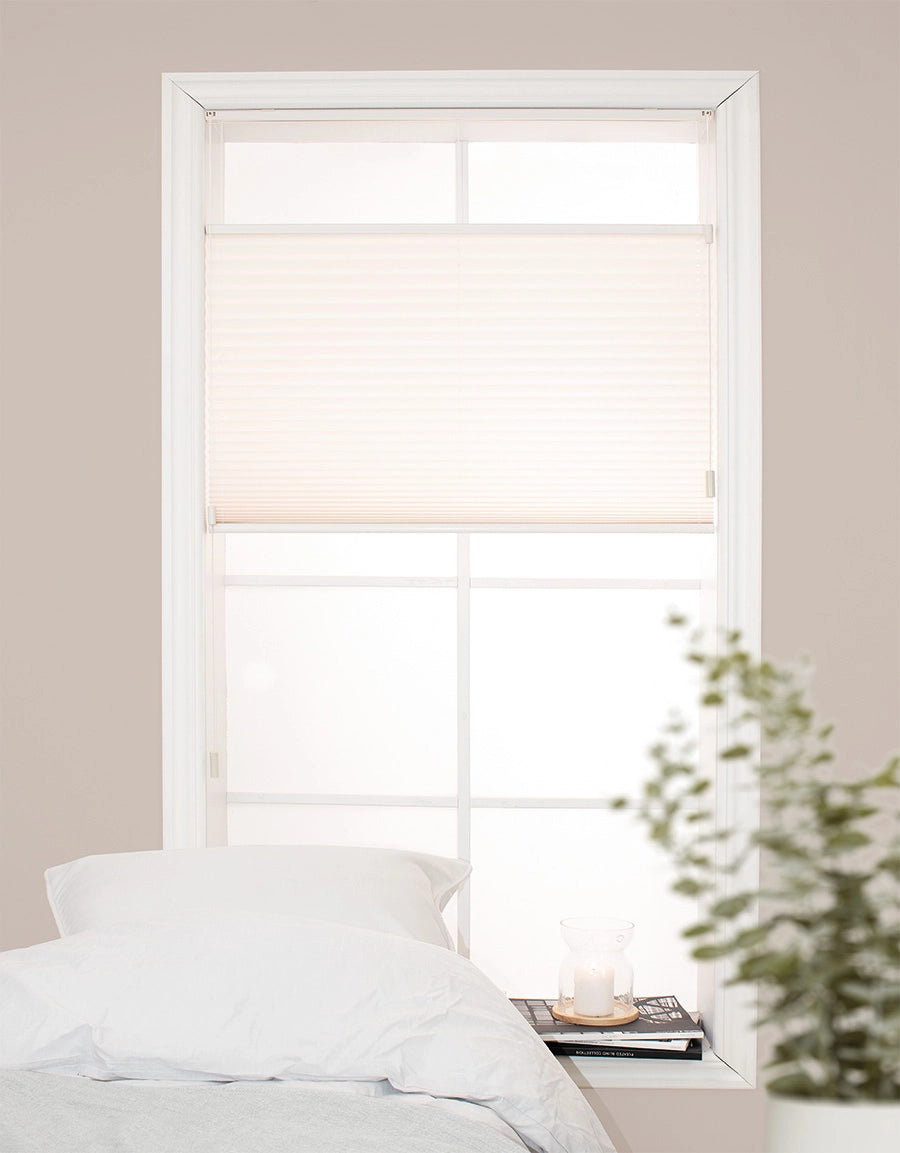
Pleated blinds are a flexible sun protection solution where you can regulate both light entry and privacy. You can also choose models with blackout fabric that contribute to a more comfortable indoor temperature. Many pleated blinds have a top-down/bottom-up function, meaning they can be adjusted both from the top and the bottom for effective privacy protection without blocking daylight.
The assortment consists of custom-made pleated blinds as well as ready-made pleated blinds, suitable for everything from standard windows to skylights and angled windows.
In this guide, you will get an overview of the pleated blind's functions, fabric options, and models, so you can easily choose a solution that suits your windows and needs.
Choose fabric by style and function
The choice of fabric affects how pleated blinds regulate light, privacy, and blackout. Our fabric collection includes transparent, translucent, and blackout fabrics in various colors and textures. Translucent or transparent fabrics let daylight through, while blackout fabrics are suitable when you want to minimize light incidence.
Honeycomb, also known as double pleated, is a double fabric often used in pleated blinds and can contribute to both blackout and a more comfortable indoor temperature through better insulation. We recommend that you order fabric samples before ordering custom-made pleated blinds, so you can see the color and texture at home.
Custom-made for a perfect fit
Manufactured to exact measurements to fit different types of windows.
Honeycomb for better insulation
Double weave (honeycomb/double pleated) with an air gap that reduces heat penetration and contributes to a comfortable indoor temperature.
Flexible light control
Several models for different window types, with the ability to adjust the blind both from the top and the bottom.

Free-hanging pleated blind for regular windows
Free-hanging pleated blinds are suitable for standard windows. They are raised and lowered with a cord from the top and function as a classic sunshade to control light and privacy.

Free-hanging pleated blind with top-down/bottom-up function
This free-hanging model has a top-down/bottom-up function, which means you can adjust the blind from both the top and the bottom. This allows you to cover the part of the window you want while still letting in daylight where needed.

Cord-guided pleated blind for angled windows
The cord-guided pleated blind has an up-and-down function and is attached with guide cords in the corners of the window, making it suitable for angled windows (up to 75 degrees). Adjusted with grips on the top or bottom edge without a pull cord, which provides smooth operation and increased child safety.

Wire-guided pleated blind for roof windows
The wire-guided pleated blind has a fixed top profile with pre-tensioned guide wires that are attached to the bottom of the window. This allows the pleated blind to be used in skylights with up to a 90-degree incline. Adjustment is made by gripping the bottom rail.
How to measure for pleated blinds
Before measuring: decide whether the pleated blind should be flush with the window frame or flush with the window pane. For blackout blinds, it is good to let the fabric cover a few extra centimeters on the sides to minimize light leakage.
Width
- Recess mounting: Measure the width of the recess in at least three places (top, middle, and bottom). Take the smallest measurement and subtract 5 mm so that the pleated blind fits and can hang freely without touching the sides.
- Wall mounting: Measure and specify the exact desired width.
Height
Measure the height in at least three places (at the edges and in the middle). Take the lowest measurement.
Get inspired by our customers
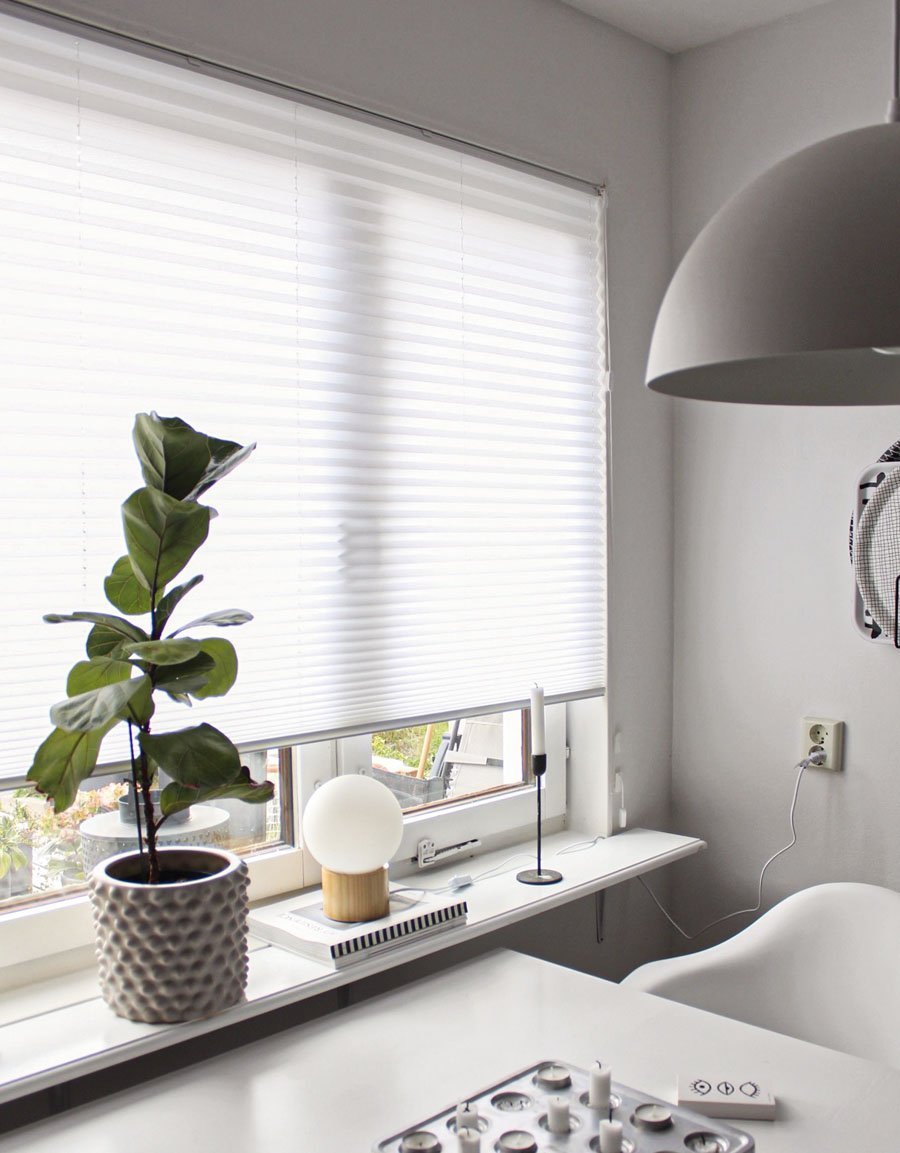

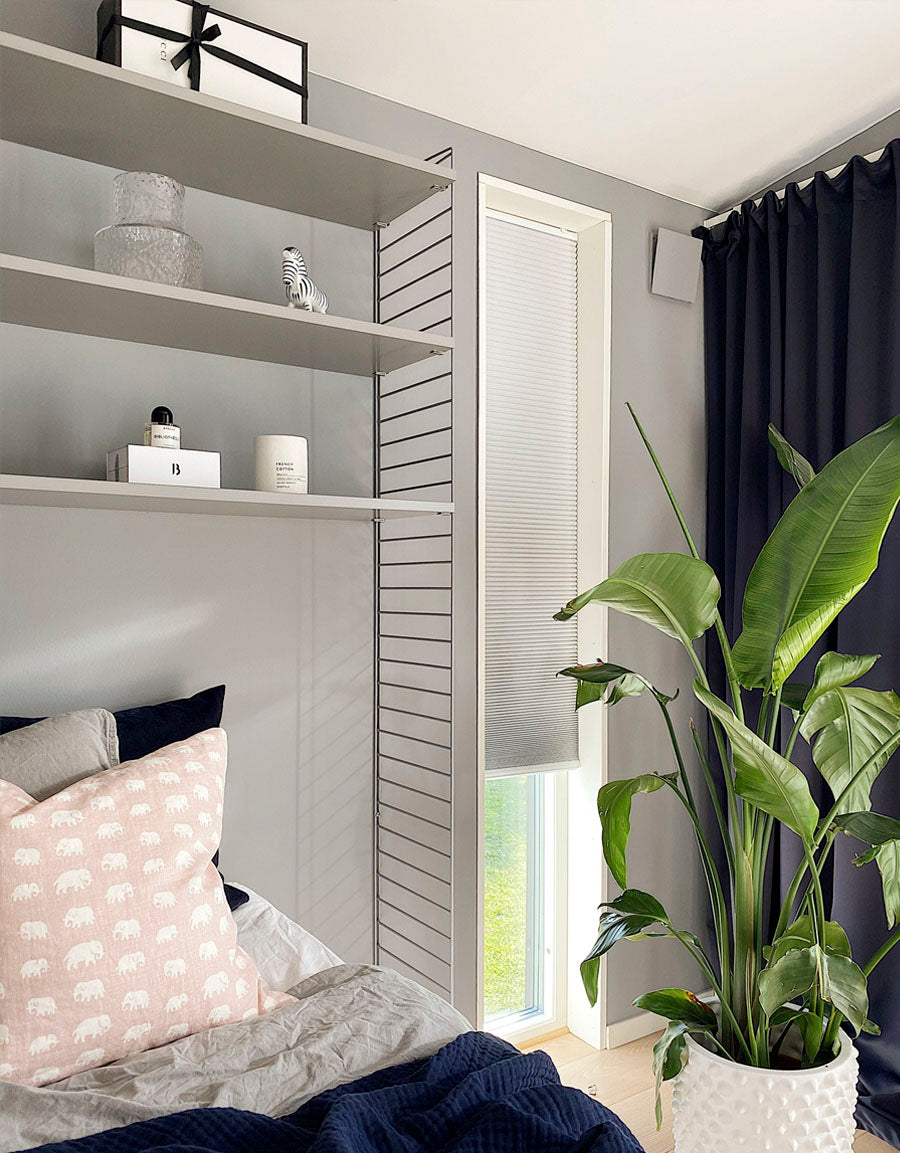
On our website, you will find a selection of our models and fabrics. If you cannot find the model or fabric you are looking for, please contact us and we will help you find a pleated blind that suits your windows and needs.